
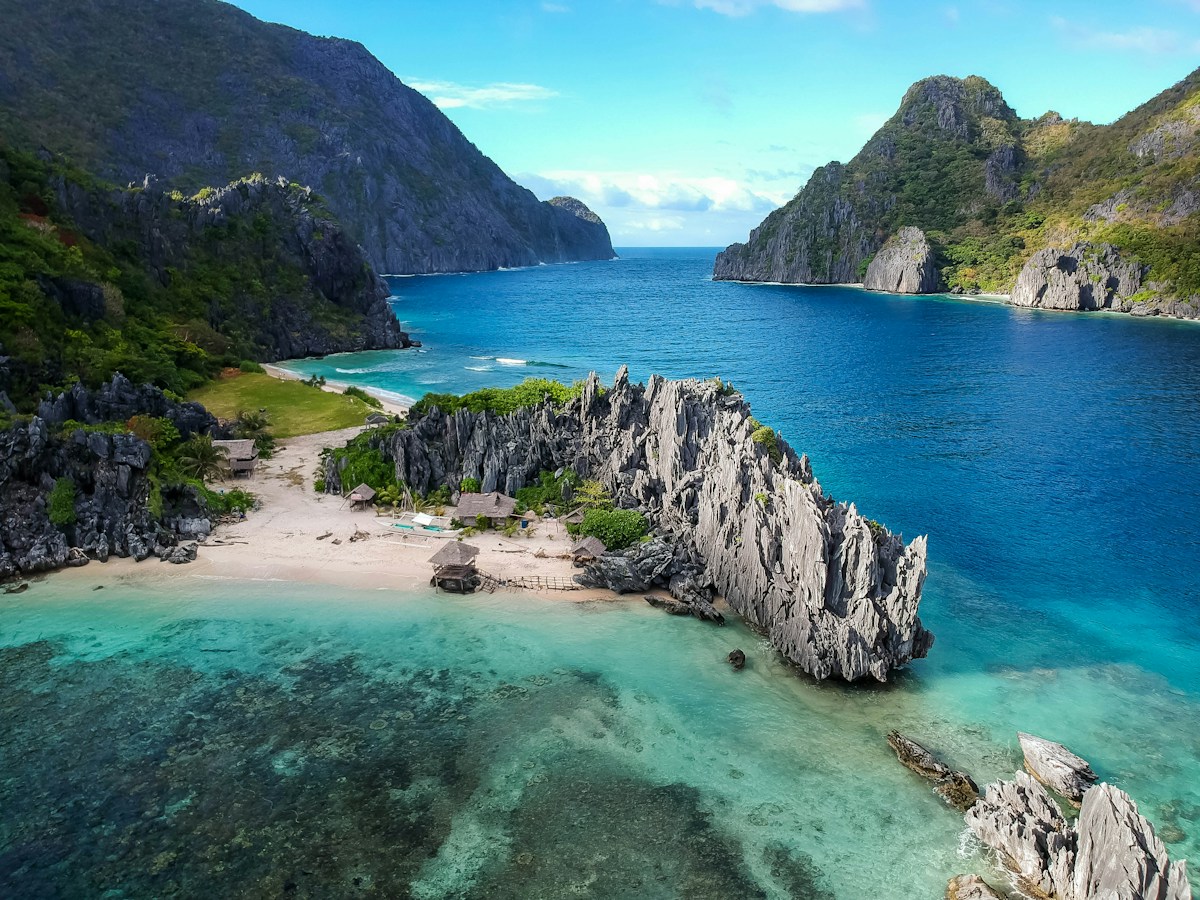
I still remember the first time I stepped off a bangka onto a white sandbar somewhere between El Nido and Coron — the water was so clear I could count individual sea urchin spines three meters down. That moment sealed it: the Philippines became my favorite country to explore. After years of hopping between its 7,641 islands, I’ve narrowed down the best tourist spots in the Philippines for anyone planning their first (or fifth) trip.
This guide covers ten destinations that deliver on the hype, plus practical tips so you don’t waste time or money figuring things out the hard way. Whether you’re chasing surf breaks, colonial history, or underwater worlds, there’s something here for you.
1. El Nido, Palawan — The Crown Jewel
El Nido barely needs an introduction. Towering limestone karsts rise straight out of turquoise lagoons, and island-hopping tours here feel like paddling through a desktop wallpaper. Tour A (Big Lagoon, Small Lagoon, Secret Lagoon, Shimizu Island) is the most popular for good reason, but Tour C is my personal pick — fewer crowds, better snorkeling at Helicopter Island.
Best time to visit: December to May, when seas are calm. June through November brings rougher water and some tour cancellations.
One practical tip: fly into Puerto Princesa and take the five-hour van ride, or grab a direct flight from Manila to Lio Airport (closer to El Nido proper). Book your tours a day ahead during peak season — walk-in slots fill up fast. The smell of grilled squid and coconut vinegar drifting from beachside carinderias at sunset is something no resort buffet can replicate.
2. Coron, Palawan — Wreck Diving Paradise
If El Nido is the pretty face of Palawan, Coron is the adventurous soul. This town is famous for its Japanese World War II shipwrecks — roughly a dozen sunken vessels sit in diveable depths, making it one of the top wreck diving destinations in the world. Even non-divers love Kayangan Lake, often called the cleanest lake in the Philippines, where you swim through crystal-clear freshwater framed by jagged rock walls.
Best time to visit: November to June for the best visibility underwater. March and April offer the calmest seas.
Skip the overpriced resort island tours and rent a private bangka with a small group — you’ll hit the same spots for half the cost. The hot springs at Maquinit are worth a sunset visit, especially after a long day of diving. The sulfuric warmth of the natural pool against the cool evening breeze is pure therapy.
3. Chocolate Hills, Bohol — Nature’s Geometry
Over 1,200 nearly symmetrical grass-covered hills spread across the Bohol interior, turning chocolate-brown during the dry season — hence the name. Standing at the viewing deck in Carmen, you get this surreal feeling that someone sculpted the landscape on purpose. Geologists say they’re weathered limestone, but honestly, they look like something out of a Dr. Seuss book.
Best time to visit: February to May, when the hills actually turn brown. During the rainy season they’re green — still beautiful, but you lose the “chocolate” effect.
Combine this with a Loboc River cruise and a visit to the Philippine Tarsier Sanctuary (the world’s smallest primate lives here). Rent a motorbike in Tagbilaran and do a DIY countryside tour — it’s far cheaper than packaged tours and you can stop wherever you want. The sound of the jungle buzzing around the tarsier sanctuary, all those layered insect calls, sticks with you.
4. Siargao Island — The Surfing Capital
Siargao went from a sleepy surf town to one of the Philippines’ hottest destinations in about five years, and the wave at Cloud 9 is the reason. This thick, barreling right-hander breaks over a shallow reef and has hosted international competitions since the late ’90s. But you don’t need to be a pro — the reef breaks at Stimpy’s and Jacking Horse are more forgiving for intermediate surfers, and beginners can learn on the gentle beach breaks near General Luna.
Best time to visit: August to November for the best swells. The shoulder months of March to May are great if you want smaller, cleaner waves and fewer people.
Beyond surfing, the island-hopping trip to Naked Island, Daku Island, and Guyam Island is a must — three tiny islands, each with a completely different vibe. Rent a motorbike (around 350 pesos per day) and explore the Magpupungko Rock Pools at low tide. The rush of cold tidal water flooding the rock pools while you’re swimming in them is an experience you won’t forget.
5. Intramuros, Manila — The Walled City
Most travelers speed through Manila on their way to beaches, and that’s a mistake. Intramuros, the old walled city built by the Spanish in the 1500s, is a genuinely fascinating walk through colonial history. Fort Santiago, where national hero José Rizal was imprisoned before his execution, is the emotional centerpiece. The nearby Manila Cathedral and San Agustin Church (a UNESCO World Heritage Site) showcase centuries-old stone architecture that survived wars and earthquakes.
Best time to visit: November to February, when Manila’s heat and humidity are slightly more manageable. Go early morning to avoid the midday sun.
Rent a bamboo bicycle from one of the tour shops along the main gate — it’s the best way to cover the walled city without melting. For food, Barbara’s Heritage Restaurant serves solid Filipino-Spanish cuisine inside a restored colonial house. The echo of your footsteps on the cobblestones at dawn, before the tourist groups arrive, makes you feel like you’ve slipped back in time.
6. Batanes Islands — The Scotland of Asia
Batanes is the Philippines’ northernmost province, closer to Taiwan than to Manila, and it looks nothing like the rest of the country. Rolling green hills, stone houses built to withstand typhoons, dramatic cliffs dropping into the Pacific — people call it the “Scotland of Asia” and the comparison isn’t far off. The Ivatan people have a distinct culture and language, and their honesty stores (unattended shops where you leave payment on the counter) tell you everything about the community here.
Best time to visit: March to June, when the weather is most stable. Flights get cancelled frequently during typhoon season (July to October), so plan accordingly.
There are only two ways in: fly from Manila or Clark via Philippine Airlines or SkyJet. Book weeks in advance — there are limited flights and seats sell out fast. Hire a local guide with a tricycle for a full-day tour of the North and South Batan routes. The constant sound of wind — not gentle breeze, actual wind — rushing over the Vayang Rolling Hills makes the silence of Manila feel oppressive by comparison.
7. Mayon Volcano, Albay — The Perfect Cone
Mayon is considered one of the most perfectly shaped volcanoes on Earth, and seeing it in person validates the claim. The symmetrical cone rises 2,462 meters above Legazpi City, and on a clear day, the view from Cagsawa Ruins (a church buried by an 1814 eruption) is iconic — you’ll recognize it from every Philippine tourism poster. Mayon is also active, which adds a layer of genuine awe to the experience.
Best time to visit: March to May for the clearest skies. The volcano hides behind clouds for much of the rainy season, so timing matters.
ATV tours at the base of the volcano run through old lava fields and offer great photo opportunities. For the adventurous, you can do a two-day trek to Camp 2 (not the summit — that’s restricted due to volcanic activity). The Bicol region’s food is a highlight too: laing (taro leaves in coconut milk) and Bicol Express (spicy pork stew) are local staples. The faint smell of sulfur that occasionally drifts down from the crater reminds you that Mayon is very much alive.
8. Vigan, Ilocos Sur — A Living Museum
Vigan is a UNESCO World Heritage City and the best-preserved example of a planned Spanish colonial town in Asia. Calle Crisologo, the cobblestoned main street lined with ancestral bahay na bato (stone houses), is the centerpiece — at night, with horse-drawn calesas clip-clopping past warm-lit windows, the atmosphere is genuinely magical. Unlike many “heritage” towns, Vigan is not a museum — people actually live and work in these centuries-old buildings.
Best time to visit: November to February (cool, dry). The Vigan City Fiesta in late January features a street dancing festival worth timing your visit around.
Don’t miss the empanada stands at the public market — Vigan’s version uses a bright orange rice flour shell stuffed with longganisa, egg, and papaya. Try the local burnay pottery workshops where artisans still use foot-powered wheels. The rhythmic clop of calesa horses on cobblestones, mixed with the sizzle of frying empanadas, is Vigan’s signature soundtrack.
9. Tubbataha Reef Natural Park — World-Class Diving
Tubbataha is not for casual travelers, and that’s precisely what makes it special. This UNESCO World Heritage reef in the middle of the Sulu Sea is accessible only by liveaboard dive boats during a narrow season, and the result is a virtually untouched underwater paradise. Over 600 fish species, 360 coral species, sharks, manta rays, and sea turtles thrive in what marine biologists rank among the healthiest reef ecosystems on the planet.
Best time to visit: Mid-March to mid-June only — this is the sole window when sea conditions allow liveaboard access.
You’ll need to book a liveaboard from Puerto Princesa (expect 6-8 day trips starting around $2,000-$3,000 USD). This isn’t a beginner dive — most operators require at least 100 logged dives. The sheer density of marine life here makes even experienced divers giddy. Drifting along the wall at Amos Rock with a school of barracuda spiraling above you, the deep blue below — it recalibrates your sense of what “good diving” means.
10. Sagada, Mountain Province — Caves, Coffee, and Quiet
Sagada sits high in the Cordillera mountains, and the cool pine-scented air hits you the moment you step off the bus. This small town is famous for its hanging coffins — an ancient Igorot burial practice where coffins are nailed to cliff faces — and the stunning Sumaguing Cave, where you wade through underground rivers and squeeze past cathedral-sized limestone chambers. But honestly, Sagada’s real draw is its pace. Everything slows down here.
Best time to visit: November to February for cool weather and the sea of clouds at Kiltepan Viewpoint at sunrise. Avoid Holy Week — the town gets overwhelmed with domestic tourists.
The bus ride from Baguio takes about six hours on winding mountain roads (take motion sickness tablets if you’re prone). Stay at one of the simple guesthouses along the main road, eat at Yoghurt House for breakfast, and hire a local guide for the cave connection tour (Sumaguing to Lumiang — about three to four hours). The cold drip of cave water on your neck while you’re waist-deep in an underground river is an oddly refreshing kind of uncomfortable.
11. Apo Island, Negros Oriental — A Snorkeler’s Dream
Apo Island is a tiny volcanic island off the coast of Dauin, and its marine sanctuary is one of the best-managed in the Philippines. The coral restoration here is a genuine success story — years of community-led protection have turned the surrounding waters into a thriving ecosystem where sea turtles are so common they barely glance at snorkelers. You don’t need scuba gear to see them; they graze on seagrass just meters from shore.
Best time to visit: November to May for calm seas. The island is a day trip from Dumaguete City, which has a lively university-town vibe worth a night or two.
Take a bangka from Malatapay (Wednesday is market day — combine the trip with the local wet market for an authentic experience). The marine sanctuary entrance fee is 100 pesos, and hiring a local guide/spotter for snorkeling is another 200-300 pesos — well worth it. The sensation of floating above a sea turtle the size of a coffee table, close enough to see the barnacles on its shell, is quietly life-changing.
Practical Travel Tips for the Philippines
Best overall time to visit: The dry season runs from November to May, with December to February being the most comfortable (less heat, minimal rain). The Visayas and Mindanao have slightly different weather patterns, so check regional forecasts.
Visa info: Citizens of most countries get 30 days visa-free on arrival. Extensions are easy to arrange at any Bureau of Immigration office for up to 36 months. Some nationalities can apply for an e-visa before arrival.
Getting around: Domestic flights (Cebu Pacific, Philippine Airlines, AirAsia) connect major destinations cheaply if booked early. Grab works in cities. Tricycles handle short distances. Bangka boats run between islands. For rougher terrain, habal-habal (motorcycle taxis) are the local solution — negotiate the fare before you hop on.
Budget range: Budget travelers can manage on $30-50 USD per day (dorm beds, local eateries, public transport). Mid-range comfort runs $80-150 USD per day (private rooms, restaurant meals, organized tours). Flights between islands are often the biggest expense — book two to three weeks ahead for the best fares.
Why the Philippines Deserves a Spot on Your List
I’ve written about a lot of countries, but the Philippines keeps pulling me back. It’s not just the landscapes — though they’d be reason enough — it’s the warmth of the people, the food that surprises you in the best way, and the sense that no matter how many islands you visit, there’s always another one worth discovering. The best tourist spots in the Philippines reward every type of traveler, whether you’ve got a week or a month.
Save this guide for your trip planning, and if you have questions about any of these destinations, drop them in the comments — I’ve been to all of them and I’m happy to help with specifics. As they say here, ingat sa biyahe — travel safe.
References
- Philippine Department of Tourism — Official tourism information, travel advisories, and destination guides
- Lonely Planet Philippines — Independent travel guides with practical tips and itineraries
- UNESCO World Heritage Centre — Details on Tubbataha Reef, Vigan, and Philippine Rice Terraces heritage listings
- Wikitravel Philippines — Community-maintained travel guide with budget tips and regional breakdowns