
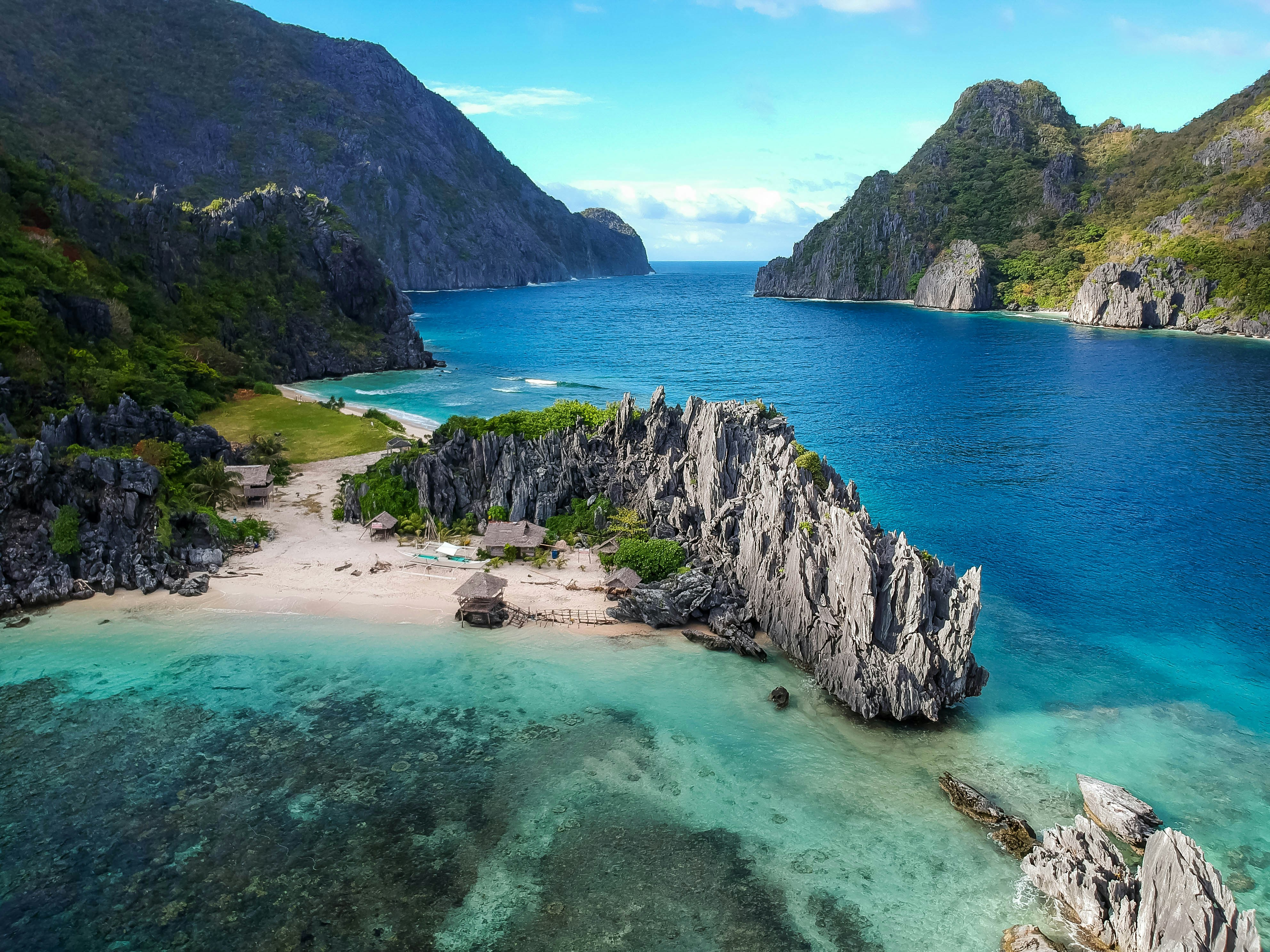
Everyone knows Boracay. Everyone knows El Nido. And those places are beautiful — genuinely, undeniably gorgeous. But the Philippines has over 7,600 islands, and the vast majority of travelers only ever see a handful. The off the beaten path Philippines offers something the popular spots can’t: the feeling of genuine discovery, of being somewhere that hasn’t been shaped by mass tourism yet.
I’ve spent years chasing these quiet corners of the archipelago — arriving on boats that run once a day, sleeping in guesthouses where you’re the only foreigner, eating meals cooked by someone’s lola (grandmother) using recipes older than anyone can remember. These places ask for more effort to reach, but they repay that effort a hundred times over. Here are ten destinations that most travelers never find.
Tawi-Tawi: The Southernmost Edge of the Off the Beaten Path Philippines
Tawi-Tawi is the final frontier. The southernmost province in the Philippines, it sits closer to Borneo than to Manila, and reaching it requires a flight to Zamboanga followed by a second flight or a long ferry ride south. Most Filipinos have never been here. Most foreign tourists haven’t heard of it. That’s exactly what makes it extraordinary.
The Bajau communities here — sea-dwelling people who’ve lived on and from the water for generations — build their houses on stilts over the shallows of the Sulu Sea. Watching their children leap from platform to platform, comfortable on the water in a way that seems almost amphibian, is one of those scenes that rewrites your understanding of how people can live. The Simunul mosque, said to be the oldest in the Philippines, stands on the island of the same name — a humble but historically powerful site.
The water around Tawi-Tawi is absurdly clear. Snorkeling off the smaller islands reveals coral gardens that see almost zero traffic, populated by fish that haven’t learned to be afraid of humans. The sunsets here, unobstructed by any landmass to the west, turn the sky into streaks of purple and gold that reflect perfectly off the glassy sea.
Best time to visit: March to June, when the seas are calmest. Practical tip: Check travel advisories before visiting, as the security situation can change. Register with the local tourism office upon arrival — they can help arrange island-hopping and connect you with Bajau communities who welcome respectful visitors.
Sabtang, Batanes
If Batanes itself is already off the beaten path, Sabtang is the path beyond the path. This small island south of the main Batan Island requires a faluwa (boat) ride that only operates when the sea cooperates — which, in Batanes, is never guaranteed. But step onto Sabtang and you enter a world that feels suspended in time.
The stone houses of Savidug and Chavayan are among the oldest inhabited structures in the Philippines. Built from limestone and coral, with thick walls designed to resist the typhoons that hammer the island, they’re still home to Ivatan families who’ve lived in them for generations. Walking through Chavayan’s narrow lanes, where the air smells of salt and dried fish and the only sounds are roosters and the distant crash of surf, feels like discovering a village the modern world simply forgot.
The Chamantad-Tinyan Viewpoint offers one of the most dramatic coastal views in the country — a sheer cliff dropping to a cove of startlingly blue water, with Sabtang’s green hills rolling away behind you. Bring a jacket. Even in summer, the wind up here bites.
Best time to visit: March to May, the most reliably calm window. Practical tip: There’s no ATM on Sabtang. Bring all the cash you’ll need from Basco. Accommodation is limited to a few homestays — book ahead through the Batanes Tourism Office. [link: Batanes travel guide]
Jomalig, Quezon
Getting to Jomalig is half the adventure. From Manila, it’s a five-hour drive to Real, Quezon, followed by a six-to-eight-hour boat ride on a cargo vessel — not a tourist boat, but a working ship that carries supplies to the island. You sleep on the deck under the stars, surrounded by sacks of rice and crates of softdrinks. It’s uncomfortable and unforgettable.
What waits on the other side is Salibungot Beach — a long stretch of golden-cream sand backed by coconut palms and facing the open Pacific. The sand has a distinctive warm tone, almost golden, that gives the beach a different character from the typical white-sand Philippines postcard. During weekdays, you might have the entire beach to yourself. The silence, broken only by waves and wind through palm fronds, feels almost sacred.
The island has no resorts, no restaurants, and minimal infrastructure. Locals rent out rooms in their homes and cook meals of freshly caught fish, rice, and whatever vegetables are growing in their gardens. It’s simple — payak, as they say — and that simplicity is the entire point.
Best time to visit: March to May, when the Pacific is at its calmest. Practical tip: The cargo boat schedule is irregular. Check with the port authority in Real before heading out, and be prepared to wait a day or two. Bring supplies — snacks, sunscreen, a good book — because once you’re on Jomalig, there’s not much to buy.
Dinagat Islands
Dinagat sits off the northeastern tip of Mindanao, a province so small and so seldom visited that finding current travel information about it requires real detective work. But travelers who make the effort discover a place of striking natural beauty — towering rock formations jutting from turquoise water, caves hidden in jungle-covered cliffs, and beaches where the sand is so fine it squeaks under your feet.
The Hagakhak Rock Formation is the island’s signature sight: massive limestone pillars rising from the sea like the ruins of a drowned cathedral. The water around them is crystalline, shifting from pale green to deep blue within meters. Kayaking between the formations at dawn, when the rising sun paints the rock faces in warm gold and the water is perfectly still, is the kind of experience you’ll replay in your mind for years.
Lake Bababu, a freshwater lake surrounded by dense forest, is another hidden treasure. The water is cool and dark, tinged brown by tannins from the trees, and the only way in is a trek through the forest. Birdsong fills the canopy above. Below, the trail is soft with decomposing leaves that release an earthy, almost mushroom-like scent with every step.
Best time to visit: March to September, avoiding the typhoon season. Practical tip: Reach Dinagat by ferry from Surigao City (about 45 minutes to an hour). Accommodation options are very limited — arrange a homestay through the provincial tourism office or bring camping gear.
Romblon
Romblon is known as the “Marble Capital of the Philippines,” but its real treasure isn’t the stone — it’s the islands themselves. The province comprises three main islands (Romblon, Tablas, and Sibuyan) and several smaller ones, each with a distinct personality. Tourism here is growing slowly, but for now, Romblon remains refreshingly undeveloped.
Romblon Island’s Bonbon Beach is connected to a small islet by a sandbar that appears at low tide — a natural bridge of white sand stretching across shallow, turquoise water. The marble quarries and workshops scattered around the island are worth visiting, not for shopping but for watching the artisans work: skilled hands transforming raw stone into mortars, vases, and tabletops using techniques passed down through families. The fine marble dust hangs in the air, catching the sunlight like snow.
Cresta de Gallo, a tiny uninhabited island between Sibuyan and Romblon, is a ring of white sand surrounding a shallow lagoon. Getting there requires chartering a boat, and the crossing can be rough, but stepping onto that sandbar — surrounded by nothing but open sea and sky — makes the turbulent ride worthwhile.
Best time to visit: March to May for the calmest seas. Practical tip: Ferries connect Romblon to Batangas (10-12 hours overnight) and to other Visayan islands. The overnight ferry from Batangas is the most common approach — bring a sleeping mat for the deck.
Masbate
Masbate is cattle country. This surprises people — the Philippines isn’t exactly known for its ranching culture — but Masbate province raises more cattle than any other in the archipelago. Every April, the Rodeo Masbateno brings real bull-riding, lasso-throwing, and bronc-busting to a purpose-built arena. Filipino cowboys in wide-brimmed hats ride alongside cheering crowds, and the whole event has a genuine, unpolished energy that feels nothing like the curated festivals elsewhere.
Beyond the rodeo, Masbate offers some of the most untouched marine environments in the Visayas. Ticao Island, off the southeastern coast, is one of the few places in the Philippines where you can reliably encounter manta rays between November and June. The Ticao Pass channels nutrient-rich water that attracts these gentle giants, and diving with them — watching a creature with a three-meter wingspan glide silently past — is humbling in a way words struggle to capture.
The island of Burias, to the north, has limestone cliffs, hidden lagoons, and a coast so sparsely populated that you can beach-hop for hours without seeing another soul. The rock formations along the coast have been carved by wind and waves into shapes that look almost sculptural — arches, tunnels, and overhangs dripping with stalactites.
Best time to visit: November to May, with the rodeo in April as a highlight. Practical tip: Masbate City is connected by daily flights from Manila (about an hour) and by ferry from Pilar, Sorsogon. Budget accommodations are basic but clean — don’t expect luxury.
Catanduanes
Catanduanes faces the open Pacific, which means two things: it gets hit by typhoons regularly, and its waves are spectacular. The island has become a quiet destination for surfers — particularly at Puraran Beach, where a powerful reef break called Majestics produces waves that draw serious riders from around the world during the August-to-November swell season.
But Catanduanes offers far more than surf. The Binurong Point viewpoint, reached by a short trail through rolling hills, reveals a dramatic coastline of rock arches and crashing waves that looks more like New Zealand than the Philippines. The farmland in the island’s interior is lush and green year-round — rice paddies terraced into gentle hillsides, with carabao (water buffalo) standing knee-deep in muddy fields. The smell of wet earth and growing rice is so thick you can almost taste it.
The Catandunganon people are famously resilient — they rebuild after every typhoon with a matter-of-fact determination that’s inspiring. Their hospitality is warm but understated. Don’t be surprised if a fisherman invites you to share his catch, grilled over coconut husks on the beach, no questions asked.
Best time to visit: February to June for the calmest weather (surfing season is August to November). Practical tip: Flights from Manila to Virac, the capital, take about an hour. Bring cash — ATMs exist but aren’t always stocked. A motorbike is the best way to explore the island.
Camotes Islands
Sitting between Cebu and Leyte, the Camotes Islands are close enough to major destinations that you’d think they’d be overrun. They’re not. Most travelers who visit Cebu never make the two-hour ferry crossing to Camotes, which means you get the limestone caves, turquoise lagoons, and palm-fringed beaches largely to yourself.
Lake Danao is the largest freshwater lake on the islands — a calm, jade-green body of water surrounded by trees where you can rent a kayak and paddle in near-total silence. Bukilat Cave, a short walk from the main road on Poro Island, opens into a chamber lit by a natural skylight, the sun streaming down onto a pool of clear blue water. Swimming in that pool, with light filtering through the cave opening and bats chittering in the shadows above, feels like entering a secret world.
Timubo Cave is another must-visit — a larger swimming cave with cold, mineral-rich water that locals believe has healing properties. Whether or not you buy the healing claims, the water is refreshing after a hot day of island exploration, and the cave formations — stalactites and stalagmites shaped over thousands of years — are genuinely impressive.
Best time to visit: March to May for dry weather and calm seas. Practical tip: Ferries run from Danao port (north of Cebu City) to Consuelo on Camotes. The trip takes about two hours on the fast ferry. Rent a motorbike on arrival — it’s the only practical way to get around.
Sibuyan Island
Marine biologists call Sibuyan the “Galapagos of Asia,” and while that comparison gets thrown around too freely in travel writing, here it’s actually justified. This small island in the Romblon province has been geographically isolated long enough to develop a remarkably high rate of endemic species — plants and animals found nowhere else on Earth.
Mount Guiting-Guiting, the island’s highest peak at 2,058 meters, is considered one of the most challenging climbs in the Philippines. The knife-edge ridge near the summit — where you crawl along a narrow spine of rock with steep drops on both sides — is not for the faint-hearted. But even if you’re not a mountaineer, the lowland forests are extraordinary. Old-growth trees with buttress roots the size of walls shade a floor carpeted in ferns and mosses. The air is cool, damp, and rich with the green smell of living forest.
Cantingas River is the clearest river I’ve seen in the Philippines — you can see individual pebbles on the bottom from three meters up. Swimming in its pools, surrounded by forest so dense the canopy blocks most of the sky, is the definition of refreshing. The local Sibuyanon people are deeply protective of their island’s environment, and that stewardship shows in how pristine everything remains.
Best time to visit: March to May for climbing and exploration. Practical tip: Access Sibuyan by ferry from Batangas or Romblon Island. The climb up Guiting-Guiting requires a mandatory guide and takes two to three days round trip. Even if you skip the summit, the lower trails offer incredible forest experiences.
Lake Holon, South Cotabato
Lake Holon is a crater lake cradled in the summit of Mount Parker, an inactive volcano in South Cotabato, Mindanao. The trek to reach it takes about four hours through thick forest managed by the T’boli indigenous community, who consider the lake sacred. And when you finally break through the tree line and see it — a perfectly round lake of clear, cool water surrounded by forested slopes — the effort instantly makes sense.
The T’boli people are among the most culturally vibrant indigenous groups in the Philippines. Their traditional t’nalak cloth, woven from abaca fiber using patterns that come to the weaver in dreams, is recognized as a national cultural treasure. Some of the guides who lead treks to Lake Holon are T’boli community members who share stories about the lake’s spiritual significance as you walk. The forest trail passes through towering trees draped in orchids and ferns, with the rich, damp smell of healthy soil underfoot.
Camping by the lake is the only way to fully experience it. At night, with no light pollution for kilometers, the stars are overwhelming — the kind of sky that makes you understand why ancient people built their cosmologies around what they saw overhead. The water at dawn, when mist rises from the surface and the surrounding forest is completely still, looks like a painting too perfect to be real.
Best time to visit: March to May for the driest conditions on the trail. Practical tip: Arrange your trek through the T’boli community in Sitio Salacafe, Lake Sebu. A mandatory guide costs around PHP 500 per day. Bring your own camping gear and supplies — there are no facilities at the lake.
Practical Tips for Off-the-Beaten-Path Travel in the Philippines
Venturing beyond the tourist trail in the Philippines requires a different approach than island-hopping in Palawan or partying in Boracay. Here’s what I’ve learned from years of seeking out the quiet corners:
- Adjust your expectations. Remote destinations mean basic accommodation, limited food options, and unreliable transport schedules. Embrace it. The tradeoff is experiences you literally cannot get anywhere else.
- Carry cash. Lots of it. ATMs are rare or nonexistent in many of these places. Bring enough Philippine pesos to cover your entire stay, plus a buffer for unexpected delays.
- Learn some Tagalog or the local language. English is widely spoken in cities, but in remote areas, basic Filipino goes a long way. “Pwede po ba” (may I please) and “Maraming salamat po” (thank you very much) open doors that money can’t.
- Pack a first aid kit. Medical facilities in remote areas are limited. Bring basics: antiseptic, bandages, rehydration salts, anti-diarrhea medication, and any prescription drugs you need.
- Respect indigenous communities. Many of these destinations are on or near ancestral lands. Ask permission before taking photos of people, follow local customs, and hire community-based guides whenever possible.
- Be flexible with your schedule. Boats get canceled. Roads wash out. Weather changes plans. Build extra days into your itinerary and treat delays as part of the adventure.
Conclusion: The Philippines Beyond the Postcard
The off the beaten path Philippines isn’t about roughing it for the sake of bragging rights. It’s about encountering a version of this country that’s raw, authentic, and deeply personal. These are places where tourism hasn’t yet smoothed the edges, where every interaction feels genuine, and where the landscapes carry a sense of discovery that popular destinations lost years ago.
Pick one destination from this list. Do your research, pack light, and go with an open mind and flexible plans. The Philippines has thousands of islands, and the ones with the fewest footprints often hold the greatest rewards. Your next unforgettable trip is waiting in a place you’ve never heard of.
References
- Philippine Department of Tourism
- Lonely Planet Philippines
- UNESCO World Heritage Centre
- Wikitravel Philippines