
I still remember my first long bus ride from Manila to the mountains of the Cordillera, watching the landscape shift from flat highways to impossible green ridges, thinking: this country has no business being this beautiful. If you’re looking for the best tourist spots in the Philippines, you’re about to discover a country with more than 7,600 islands, each one with a personality of its own. From limestone cliffs that shoot out of turquoise water to colonial towns frozen in the Spanish era, the Philippines rewards every kind of traveler — the adventurer, the history buff, the beach bum, and the soul-searcher.
I’ve spent years crisscrossing this archipelago, collecting sunburns and stories, and I keep coming back to the same ten spots that define what Philippine travel is all about. This Philippines travel guide covers the highlights — the places that make first-timers gasp and repeat visitors homesick. Let me walk you through them.
Palawan: El Nido and Coron — The Crown Jewels of Philippine Tourism
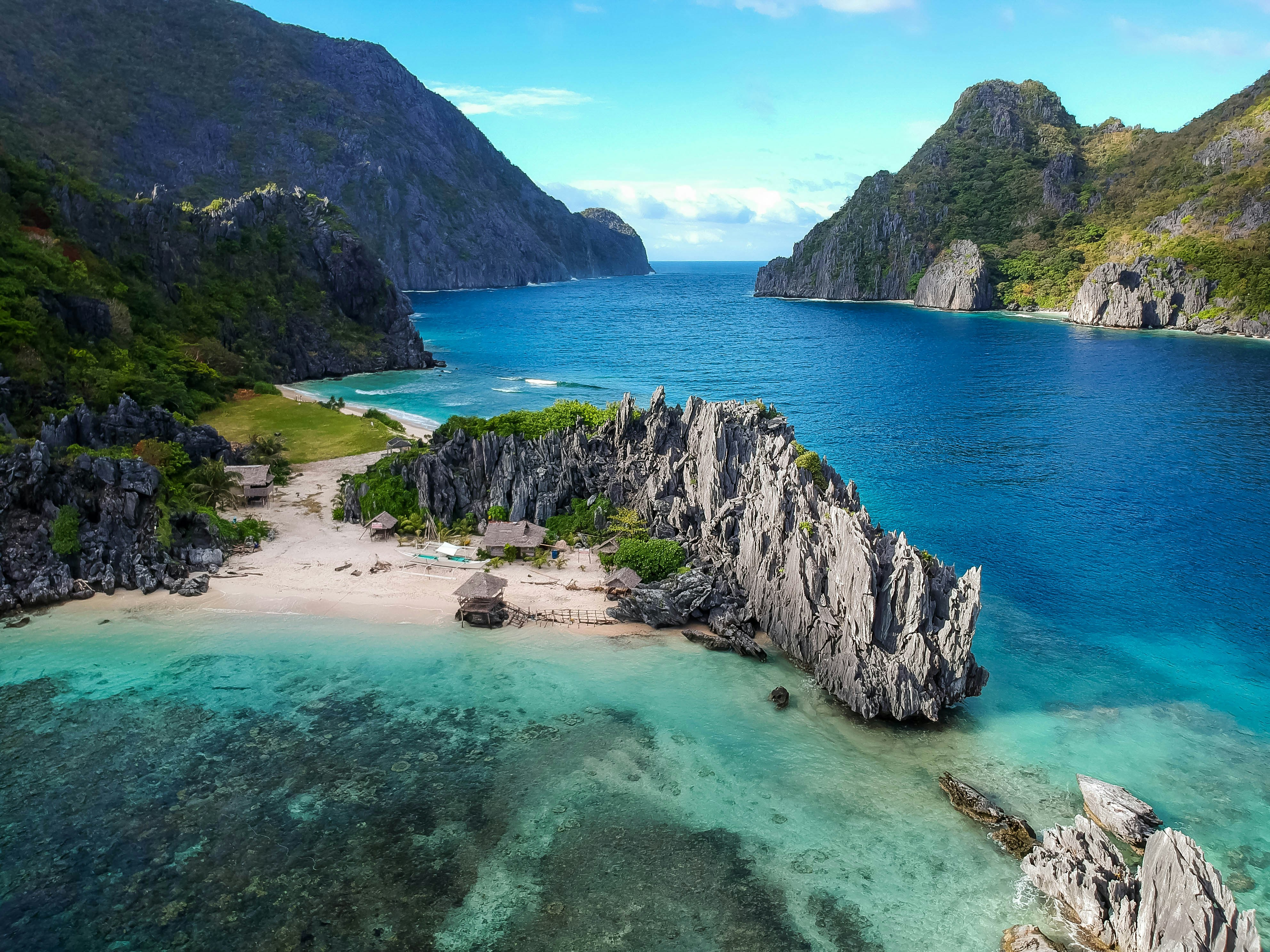
There’s a reason Palawan keeps winning “best island” polls around the world. El Nido hits you with its karst limestone formations — massive dark cliffs that rise straight from water so clear you can count fish from your bangka (outrigger boat). The Big Lagoon on Tour A is one of those places that looks photoshopped in person. The water shifts from jade green to sapphire blue depending on where you’re standing, and the silence inside the lagoon walls feels almost sacred.
Coron, meanwhile, is a wreck diver’s paradise. Japanese warships from World War II rest on the ocean floor, now draped in coral and swarming with tropical fish. Even if you don’t dive, Kayangan Lake — a freshwater lake hidden behind a limestone ridge — will stop you in your tracks. The water is so transparent that rocks ten meters below look close enough to touch.
Best time to visit: November to May, when the dry season keeps the seas calm for island hopping.
Practical tip: Book island-hopping tours at least two days in advance during peak season (December to February). Walk-in slots fill up fast, especially for the popular Tour A and Tour C routes in El Nido.
[link: Palawan travel guide]
Boracay: The Party Island That Cleaned Up Its Act
Boracay’s White Beach is still one of the most photogenic stretches of sand in Southeast Asia. After the island’s six-month rehabilitation closure in 2018, the water quality bounced back dramatically. The powdery white sand — locals call it buhangin — feels like flour between your toes, and the sunsets paint the sky in shades of mango and watermelon every single evening.
Station 1 is the quieter end, with upscale resorts and wider beach frontage. Station 2 is the social hub — restaurants, bars, fire dancers after dark. Station 3 has the budget stays and a more laid-back crowd. Beyond the main beach, Puka Shell Beach on the north end offers a rougher, less manicured coastline where the waves actually have some personality.
Best time to visit: November to April. The Amihan season brings dry weather and calm seas on the western shore.
Practical tip: Boracay now requires pre-approved accommodation bookings before you can board the ferry. Check with your hotel about the tourist registration requirements before traveling.
Chocolate Hills, Bohol: Geology’s Sweet Surprise
More than 1,200 cone-shaped hills spread across central Bohol, covered in grass that turns chocolate brown during the dry season — hence the name. Standing at the viewing deck in Carmen, the panorama stretches to the horizon, hundreds of near-identical mounds rolling like a giant’s playground. It’s surreal. The air smells like sun-baked earth and dry grass, and the only sound is wind.
Bohol pairs well with the Chocolate Hills. The Philippine tarsier sanctuary in Corella lets you see the world’s smallest primate up close — tiny creatures with enormous amber eyes clinging to branches. The Loboc River cruise serves a buffet lunch on a floating restaurant while local musicians play folk songs. It’s touristy, yes, but genuinely fun.
Best time to visit: February to June, when the grass is driest and the hills look most like chocolate. The rainy season (July to October) turns them green.
Practical tip: Rent a motorbike from Tagbilaran City to explore at your own pace. Organized tours rush through the sights. A full-day self-guided trip lets you linger.
Siargao: The Surfing Capital of the Philippines
Siargao used to be the Philippines’ best-kept secret. Not anymore — but it still feels wilder and more authentic than the big-name destinations. Cloud 9, the famous surf break, delivers some of the best barrel waves in Asia. Even if you don’t surf, watching riders drop into those hollow tubes from the iconic timber boardwalk is mesmerizing.
The island’s interior is pure coconut country — tall palms as far as you can see, red dirt roads, and small barangays (villages) where everyone waves at passing motorbikes. The island-hopping trip to Naked Island, Daku Island, and Guyam Island is a must: three tiny islands in the open ocean, each one a different flavor of tropical paradise. Naked Island is literally just a sandbar. Daku has coconut palms and a small community that grills fresh seafood. Guyam is a postcard-perfect circle of sand and trees.
Best time to visit: September to November for the biggest swells (experienced surfers). March to October for beginners learning on gentler waves.
Practical tip: Stay in General Luna, not the town of Siargao. Almost everything — restaurants, surf shops, nightlife — is concentrated in GL.
Vigan: A Living Museum of Spanish Colonial Architecture
Walking down Calle Crisologo in Vigan feels like stepping into the 18th century. Cobblestone streets lined with ancestral houses, their ground floors made of stone and upper floors of hardwood, with capiz shell windows that glow warm yellow at night. Horse-drawn carriages called kalesa clatter past, and the smell of empanada — Vigan’s famous orange-crusted savory pastry stuffed with longganisa sausage, egg, and papaya — drifts from street vendors.
Vigan is a UNESCO World Heritage Site and one of the best-preserved examples of a planned Spanish colonial town in Asia. Beyond Calle Crisologo, the Bantay Bell Tower offers a panoramic view of the Ilocos coastline, and the pottery village of Pagburnayan still makes burnay jars using centuries-old techniques.
Best time to visit: January to March. The Vigan City Fiesta in late January features a street art festival and the famous Binatbatan Festival of the Arts.
Practical tip: Stay in one of the heritage houses converted to hotels for the full experience. Rooms with capiz windows and four-poster beds run about 2,500 to 4,000 pesos per night.
Best Tourist Spots in the Philippines: The Batanes Islands
Batanes feels like Ireland got lost in the Pacific Ocean. Rolling green hills, stone houses with cogon grass roofs, dramatic sea cliffs where the Pacific Ocean meets the West Philippine Sea. This is the Philippines’ northernmost province, closer to Taiwan than to Manila, and it has a culture and landscape unlike anywhere else in the country.
The Ivatan people, the indigenous inhabitants, build their homes from limestone and coral to withstand typhoons. Their houses are engineering marvels — thick walls, low doorways, and heavy thatch roofs roped down against the wind. The Valugan Boulder Beach is unforgettable: smooth boulders the size of cars, tumbled by centuries of storms, lining a coast where waves explode into white spray.
Best time to visit: March to June, the calmest weather window. Flights get canceled frequently during typhoon season (July to November).
Practical tip: Book flights well in advance. Only Philippine Airlines and a couple of smaller carriers serve Basco airport, and seats sell out weeks ahead.
Mayon Volcano, Albay: The Perfect Cone
Mayon is considered the world’s most perfectly shaped volcano, and on a clear day, the symmetry is jaw-dropping. The cone rises 2,462 meters above the Albay Gulf, its slopes striped with old lava flows and its summit often wreathed in a thin scarf of steam. From Lignon Hill Nature Park, you get the classic postcard view — Mayon framed by palm trees and the red roofs of Legazpi City.
The ATV ride across the lava fields of Cagsawa is one of the most popular activities. You’ll bounce over hardened volcanic rock to the ruins of Cagsawa Church, destroyed by an eruption in 1814. Only the bell tower remains, poking out of the ground like a gravestone for the old town buried beneath.
Best time to visit: March to May for the clearest skies. Mayon is notoriously shy — cloud cover can hide the summit for days.
Practical tip: Check the Philippine Institute of Volcanology’s alert level before planning activities near the volcano. At Alert Level 2 or higher, a permanent danger zone restricts access.
Tubbataha Reefs Natural Park: A Diver’s Holy Grail
Located in the middle of the Sulu Sea, Tubbataha is a UNESCO World Heritage Site and one of the world’s finest dive locations. It protects nearly 100,000 hectares of marine habitat, including some 600 species of fish, 360 species of coral, and regular sightings of manta rays, hammerhead sharks, and sea turtles. The visibility underwater regularly exceeds 30 meters — you can see the reef wall dropping into the abyss below you.
Getting to Tubbataha requires commitment. Liveaboard boats depart from Puerto Princesa, Palawan, and the journey takes roughly 10 to 12 hours overnight. You sleep, eat, and dive from the boat for three to five days. It’s not cheap and it’s not easy, but divers who’ve been there call it life-changing.
Best time to visit: Mid-March to mid-June — the only window when sea conditions allow safe passage and diving.
Practical tip: Book your liveaboard six months to a year in advance. Only a limited number of operators have permits, and the diving season is short.
Ifugao Rice Terraces: The Eighth Wonder of the World
The rice terraces of Ifugao province in the Cordillera highlands were carved into mountainsides roughly 2,000 years ago by the ancestors of the Ifugao people. Standing at the Banaue Viewpoint, you’ll see tier after tier of green paddies stepping down into a valley, fed by an ancient irrigation system that channels water from mountain forests above. The scale is staggering — if the terraces were laid end to end, they’d stretch halfway around the globe.
Batad, a smaller and more remote amphitheater of terraces, is the more dramatic sight. You’ll need to hike about 45 minutes from the nearest road to reach it. The trail drops steeply into a valley shaped like a bowl, every surface carved into perfect horizontal lines of rice paddies. The Tappiyah Falls at the bottom of the valley rewards the sweaty descent with a cool freshwater pool.
Best time to visit: February to March for the planting season, when the terraces are flooded and reflect the sky. June to July for harvest, when they turn golden.
Practical tip: Hire a local Ifugao guide. They know the trails, share cultural context you won’t get from a guidebook, and you directly support the community that maintains the terraces. Expect to pay around 1,500 to 2,500 pesos per day.
Cebu: History, Waterfalls, and Whale Sharks
Cebu is where Philippine history and modern beach culture collide. Magellan’s Cross in downtown Cebu City marks the spot where Christianity arrived in the Philippines in 1521. The Basilica del Santo Nino, the oldest Roman Catholic parish in the country, sits a few blocks away, its interior thick with candle smoke and devotion. During the Sinulog Festival every January, the streets explode with drums, dancing, and millions of devotees — it’s the biggest cultural event in the Visayas.
Outside the city, Cebu’s natural attractions are world-class. Kawasan Falls in Badian drops turquoise water into natural pools surrounded by jungle. Oslob offers the controversial but undeniably thrilling experience of swimming alongside whale sharks — butanding in Filipino. And the island of Moalboal, reachable by bus from Cebu City, has a sardine run visible from the beach: millions of sardines forming swirling silver clouds just offshore.
Best time to visit: January to May. The third Sunday of January is Sinulog — plan months ahead if you want to experience it.
Practical tip: Cebu is a great base for exploring the central Visayas. Ferries connect to Bohol (two hours), Siquijor, Dumaguete, and Leyte. Use Cebu as your hub and island-hop from there.
Practical Travel Tips for Exploring the Philippines
Before you pack your bags, here are some essential things I’ve learned from years of traveling across this archipelago.
- Getting around: Domestic flights are the fastest way to cover distance. Cebu Pacific and Philippine Airlines serve most major destinations. For shorter hops, ferries (2GO Travel, FastCat) are reliable and affordable. On land, the jeepney (a converted WWII jeep) is the cheapest option for short distances, while vans and buses handle intercity routes.
- Budget: The Philippines is very affordable for international travelers. A comfortable mid-range budget runs about 3,000 to 5,000 pesos per day (roughly $55 to $90 USD), covering accommodation, meals, and transport. Budget travelers can get by on 1,500 to 2,000 pesos.
- Connectivity: Globe and Smart are the two main mobile networks. Buy a local SIM card at the airport for about 300 pesos with data. Coverage is good in cities and tourist areas, spotty in remote islands.
- Safety: The Philippines is generally safe for tourists. Common-sense precautions apply — watch your belongings in crowded areas, use reputable transport, and check travel advisories for specific regions.
- Language: Filipino (Tagalog) and English are both official languages. You’ll have no trouble communicating in English in tourist areas. Learning a few Filipino phrases earns you smiles: Salamat (thank you), Magandang umaga (good morning), Magkano? (how much?).
- Food: Don’t leave without trying adobo (meat braised in vinegar and soy sauce), sinigang (sour tamarind soup), lechon (roast pig), and halo-halo (shaved ice with sweet beans, fruits, and leche flan). Street food is generally safe — just follow the crowds to the busiest stalls.
Your Philippine Adventure Starts Now
The best tourist spots in the Philippines aren’t just destinations — they’re experiences that rewire something inside you. The first time you see sunlight hit the limestone cliffs of El Nido, or stand in the quiet of a 400-year-old church, or taste your first bite of real Cebuano lechon with skin so crispy it shatters — these moments don’t fade.
This country is vast, varied, and endlessly surprising. You could spend a lifetime exploring and still find new islands, new stories, new plates of food that change your understanding of flavor. My advice? Start with one region, go slow, talk to locals, eat everything, and trust that the Philippines will give you more than you expected.
Have you visited any of these spots? Got a favorite I missed? Drop your stories in the comments — I’d love to hear where the Philippines took you. And if you’re still planning, check out our [link: Philippines travel guide] for detailed itineraries and booking tips. Ingat (take care), and happy travels!
References
- Department of Tourism Philippines
- Lonely Planet: Philippines
- UNESCO World Heritage Centre
- Wikitravel: Philippines