
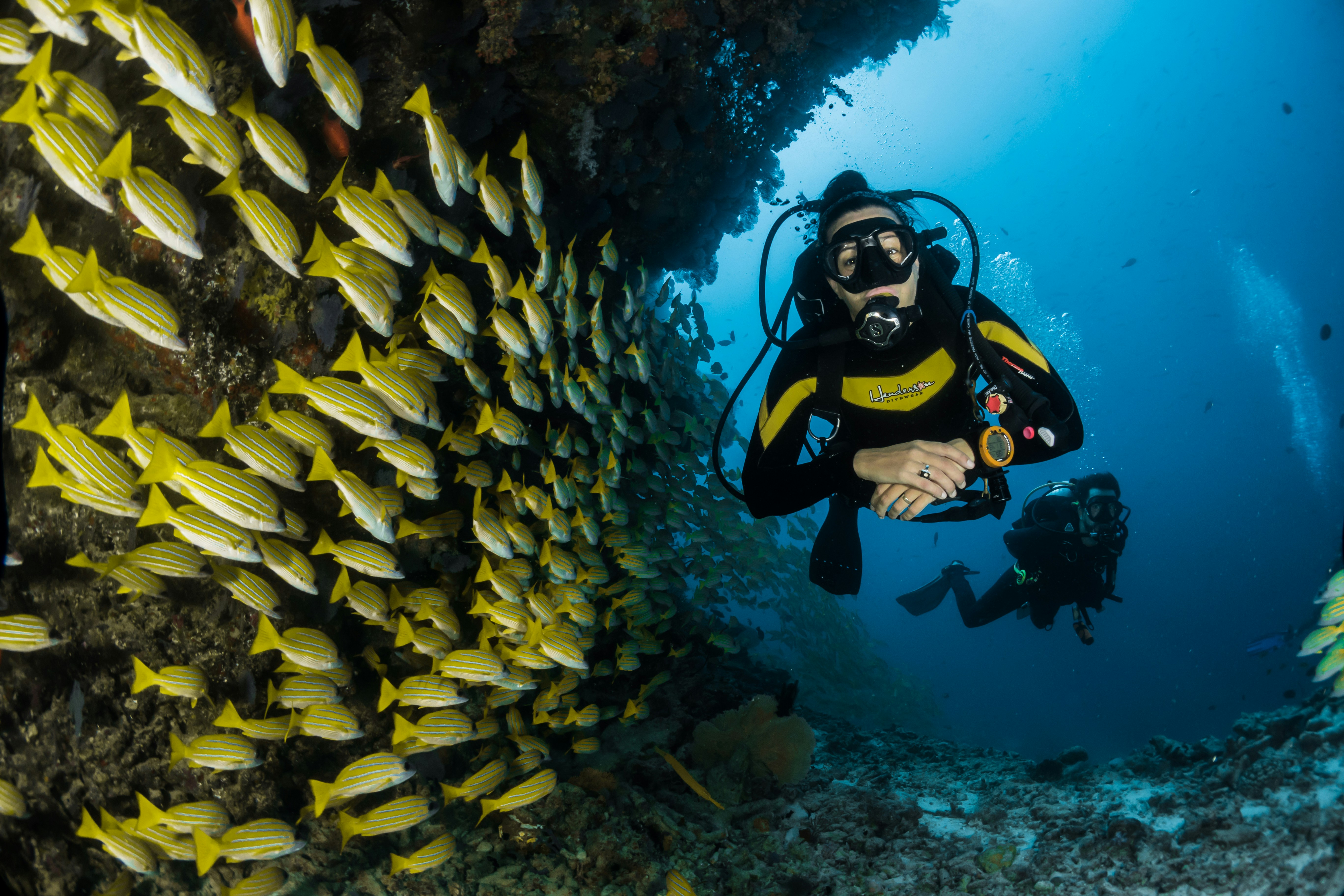
The Philippines sits at the heart of the Coral Triangle, the most biodiverse marine region on Earth. If you’re searching for the best diving spots in the Philippines, you’re looking at a country with over 7,600 islands, thousands of kilometers of reef, and underwater visibility that can stretch past 30 meters on a good day. I’ve been diving these waters for years, and every trip still manages to show me something new — a species I haven’t seen, a wall I haven’t dropped, a wreck I didn’t know existed.
From the open-ocean spectacle of Tubbataha Reef to the haunting Japanese shipwrecks of Coron, Philippine dive sites offer variety that few countries can match. Whether you’re a newly certified Open Water diver or a seasoned tech diver chasing deep wrecks, there’s a spot here that will leave you surfacing with a grin. Here are ten of the best.
Tubbataha Reef: The Crown Jewel of Philippine Diving
Tubbataha Reefs Natural Park is a UNESCO World Heritage Site located in the middle of the Sulu Sea, about 150 kilometers southeast of Puerto Princesa, Palawan. It’s accessible only by liveaboard, and only during a narrow window from mid-March to mid-June when the seas are calm enough to make the 10 to 12-hour crossing.
The reef system covers nearly 100,000 hectares and includes two large atolls with walls that plunge vertically from the shallows into deep blue water. The marine life here is staggering — over 600 species of fish, 360 species of coral, and regular sightings of manta rays, hammerhead sharks, whale sharks, and sea turtles. It’s the kind of diving where you don’t know which direction to look because everything demands your attention.
Dropping over the wall at Tubbataha, the water is so clear it feels like floating in space. The blue below you is absolute — no bottom visible, just deep open ocean where pelagics cruise. The coral coverage on the reef tops is dense and healthy, a vivid contrast to degraded reefs elsewhere.
Best time to visit: March to June, the only season when liveaboards operate. Practical tip: Book your liveaboard trip at least six months in advance. Slots sell out quickly, and there are only a limited number of vessels permitted to operate in the park.
Apo Reef: The Second Largest Contiguous Reef in the World
Apo Reef Natural Park lies off the coast of Sablayan, Occidental Mindoro. It’s the largest contiguous coral reef system in the Philippines and the second largest in the world, covering approximately 34 square kilometers. The reef consists of two large lagoons surrounded by a barrier reef with numerous dive sites along its outer walls.
The diving here is characterized by strong currents, big fish action, and excellent wall diving. Sharks — whitetip, blacktip, and the occasional hammerhead — patrol the deeper sections. Manta rays visit seasonally, and the sheer volume of reef fish along the walls is overwhelming. Schools of jacks, barracuda, and surgeonfish swirl in formations that block out the light above.
Getting to Apo Reef takes effort. You’ll need to travel to Sablayan, then take a boat ride of about two to three hours. Most divers stay on the island ranger station or on a boat. The remoteness is part of the appeal — you’re diving a world-class reef with almost no other divers around. The silence underwater is broken only by the crackling of shrimp and the occasional low rumble of a distant boat engine.
Best time to visit: March to June for calm seas and best visibility. Practical tip: Bring your own dive gear if possible. Rental equipment in Sablayan is limited. Current can be strong, so this is better suited for intermediate to advanced divers.
Moalboal Sardine Run: Millions of Fish in Motion
Moalboal on the southwestern coast of Cebu is famous for one thing above all else: its resident sardine run. Unlike the seasonal sardine runs of South Africa, Moalboal’s sardines are present year-round — a swirling, pulsating ball of millions of fish just meters from the shore at Panagsama Beach.
Swimming into the sardine ball is an experience that overwhelms the senses. The fish move as a single organism, shifting shape in response to divers, predators, and current. Light filters through the mass in flickering patterns, and the sound — a soft, collective rustling — fills the water around you. It’s hypnotic.
Beyond the sardines, Moalboal offers excellent reef diving along its house reef and nearby Pescador Island, where a cathedral-like underwater cave opens to a column of blue light from above. Sea turtles are common, and the coral diversity is strong. The town itself is a laid-back dive hub with affordable accommodation, good food, and a friendly community of resident divers and instructors.
Best time to visit: Year-round for the sardines. November to May for the calmest conditions. Practical tip: You can snorkel the sardine run — no certification needed. The ball often forms within 5 meters of the surface, right off the beach. Libre lang ang pasok (entry is free) at the public access point.
Malapascua: Thresher Sharks at Dawn
Malapascua Island, a tiny island off the northern tip of Cebu, is one of the only places in the world where you can reliably see thresher sharks on a regular basis. The sharks visit a cleaning station at Monad Shoal, a submerged plateau about a 30-minute boat ride from the island. Dives happen early — you’re in the water before sunrise, descending to around 20 to 25 meters, then waiting on the sandy bottom for the sharks to rise from the deep.
Watching a thresher shark materialize from the blue is extraordinary. Their tails — longer than their bodies, whip-like, evolved for stunning prey — give them an alien elegance. They glide slowly over the cleaning station, allowing smaller fish to pick parasites from their skin, seemingly unbothered by the row of divers watching from the edge.
Malapascua also offers outstanding macro diving at sites like Gato Island, where sea snakes, nudibranchs, and bamboo sharks hide in crevices and swim-throughs. The island itself is small, walkable, and has the relaxed atmosphere of a place where everyone knows why they’re there — the sharks.
Best time to visit: Year-round, though December to May offers calmer seas. Practical tip: Book your thresher shark dive for the first morning of your stay. Weather can change, and you want backup days. Most dive shops run daily dawn dives to Monad Shoal.
Anilao: The Macro Capital of the Philippines
Anilao in Mabini, Batangas is the closest serious diving destination to Manila — about two and a half to three hours by road. It’s known internationally as a macro photography paradise, and underwater photographers from around the world come here specifically for the tiny, bizarre creatures that inhabit its muck and reef sites.
The list of critters is absurd: blue-ringed octopus, hairy frogfish, flamboyant cuttlefish, mimic octopus, Shaun the Sheep nudibranchs, ghost pipefish, seahorses of multiple species, and a catalog of nudibranchs that would fill a book. Dive guides here have an almost supernatural ability to spot creatures the size of a fingernail on a featureless sandy slope.
The reef diving is also excellent, with healthy hard and soft coral gardens at sites like Beatrice, Kirby’s Rock, and Cathedral. The variety packed into this relatively small area is remarkable. You can do a muck dive in the morning and a vibrant reef dive in the afternoon without traveling far.
Best time to visit: November to May for calm seas. Critter sightings are year-round. Practical tip: Stay at one of the dive resorts along the Anilao coast rather than commuting from Batangas City. Most resorts have house reefs and on-site dive centers. The bangka (outrigger boat) rides to dive sites are short — usually under 20 minutes.
Coron Shipwrecks: Best Diving Spots Philippines for Wreck Lovers
Coron in northern Palawan is the wreck diving capital of the Philippines. During World War II, American aircraft attacked a fleet of Japanese supply ships sheltering in Coron Bay on September 24, 1944. Today, at least a dozen of these wrecks rest on the seafloor at depths ranging from 10 to 40 meters, creating one of the densest concentrations of diveable shipwrecks in the world.
The wrecks have been colonized by coral and marine life over eight decades. Swimming through the cargo holds of the Irako, the engine room of the Akitsushima, or the tilted corridors of the Olympia Maru, you move between history and ecology. Schools of batfish hang at entrances, lionfish perch on rusted beams, and the filtered light inside the wrecks creates an atmosphere that is equal parts eerie and beautiful.
The Skeleton Wreck, sitting upright in shallow water, is perfect for beginners. The Okikawa Maru, a tanker resting at around 26 meters, is massive and open enough for comfortable penetration. For experienced wreck divers, the deeper wrecks like the Irako (at 40+ meters) offer serious exploration opportunities.
Best time to visit: November to May for best visibility and calm conditions. Practical tip: If you’re interested in wreck penetration, bring or rent a reliable dive light. Internal visibility in some wrecks can drop to near zero if silt is disturbed. A wreck specialty certification is recommended for penetration dives.
Balicasag Island: Bohol’s Underwater Treasure
Balicasag Island sits about six kilometers off the southwest coast of Panglao, Bohol. This tiny, round island — you can walk its circumference in about 20 minutes — is surrounded by a marine sanctuary with some of the most pristine wall diving in the Visayas.
The wall drops steeply from a shallow coral garden into deep blue water. The coral coverage on the upper sections is dense and colorful — hard corals, soft corals, sea fans, and sponges packed together. Green sea turtles are almost guaranteed on every dive, grazing calmly on the reef or resting under ledges. Schools of jacks form tight, spiraling columns that you can swim alongside.
The Black Forest dive site is a standout — named for its dense garden of black coral trees. It’s deeper, around 30 to 40 meters, and requires good buoyancy control, but the landscape down there is unlike anything on the shallower sections.
Best time to visit: March to June for optimal conditions. Practical tip: Day trips from Panglao are common, but booking directly with a Panglao-based dive shop gets you to Balicasag early, before the snorkeling tour boats arrive and the water gets crowded.
Dauin: Negros Oriental’s Muck Diving Haven
Dauin in Negros Oriental is the other major macro diving destination in the Philippines, rivaling Anilao in critter diversity. The black volcanic sand slopes along the Dauin coast are home to a staggering variety of small and unusual marine life: wonderpus octopus, ambon scorpionfish, robust ghost pipefish, mandarin fish (best seen at dusk), and an endless parade of nudibranchs.
What sets Dauin apart from Anilao is the combination of muck diving with nearby reef diving at Apo Island — a marine sanctuary about 30 minutes offshore with excellent coral walls, sea turtles, and pelagic fish. You can alternate between muck and reef diving on the same day, which keeps things fresh.
The dive resorts in Dauin are spread along a quiet coastal road with a relaxed, rural atmosphere. Roosters crow at dawn, carabao (water buffalo) graze in nearby fields, and the pace of life is slow. It’s a genuine contrast to more developed dive destinations.
Best time to visit: Year-round for muck diving. November to May for Apo Island. Practical tip: Ask your dive guide to take you to a mandarin fish site at sunset. Watching these tiny, psychedelically colored fish emerge from the rubble to mate at dusk is one of the most magical underwater experiences in the Philippines.
Anda, Bohol: The Quiet Alternative
Anda on the eastern coast of Bohol is still relatively under the radar compared to Panglao, and that’s exactly its appeal. The diving here features a long fringing reef with excellent macro life, caves, and swim-throughs. The visibility is generally strong, and the sites are uncrowded — some days you’ll be the only divers on the reef.
The reef systems around Anda are healthy, with good coral coverage and a surprisingly rich variety of marine life for a destination that doesn’t appear on most divers’ radar. Seahorses, octopus, cuttlefish, and nudibranchs populate the sand and rubble areas, while the reef walls host schools of fusiliers, anthias, and occasional passing pelagics.
Above water, Anda offers white sand beaches, freshwater pools in the forest, and a handful of quiet resorts. The lack of tourist infrastructure means fewer restaurants and nightlife options, but the trade-off is genuine tranquility and some of the cheapest diving rates in the country.
Best time to visit: March to June for calmest seas. Practical tip: Rent a motorbike to explore the area. Anda has several stunning natural swimming holes, like Cabagnow Cave Pool, that are worth visiting between dives.
Verde Island Passage: The Center of the Center
The Verde Island Passage, the strait between Luzon and Mindoro, has been called the “center of the center of marine shorefish biodiversity” by marine scientists. This narrow channel funnels nutrient-rich currents between the South China Sea and the Philippine Sea, creating conditions that support an extraordinary concentration of marine species.
Diving here means strong currents, big fish, and incredible biodiversity. The passage is accessible from several points — Anilao on the Batangas side, Puerto Galera on the Mindoro side — each offering different dive experiences. Puerto Galera’s Canyons and Hole in the Wall are famous drift dives where the current carries you past walls covered in soft coral while sharks and trevally patrol the blue.
The scientific significance of this area is hard to overstate. Researchers have documented more species of marine life per unit area here than anywhere else on Earth. Every dive is essentially a swim through the most biodiverse waters on the planet. That knowledge adds a weight to the experience — you’re not just diving, you’re witnessing the richest marine ecosystem that exists.
Best time to visit: November to May for best conditions. Currents are present year-round. Practical tip: Drift diving experience is essential for Verde Island Passage sites. If you’re not comfortable in current, get practice at easier drift sites first. Carrying a surface marker buoy (SMB) is mandatory — the boat traffic in the passage is significant.
Practical Tips for Scuba Diving in the Philippines
Here are the essentials for planning your scuba diving Philippines adventure:
- Certification: Get certified before you arrive, or take your Open Water course at one of the many PADI/SSI centers in Moalboal, Puerto Galera, or Panglao. Courses are significantly cheaper here than in most Western countries — expect to pay PHP 15,000 to 20,000 (roughly USD 270 to 360) for a full Open Water course.
- Dive insurance: Get DAN (Divers Alert Network) insurance before your trip. The nearest hyperbaric chambers are in Cebu, Batangas, and Subic, and emergency evacuation costs can be enormous without coverage.
- Gear: At minimum, bring your own mask, computer, and SMB. Most dive centers rent the rest, but quality varies. If you have your own regulator and BCD, bringing them ensures reliability.
- Marine park fees: Many dive sites charge marine park or sanctuary fees, typically PHP 100 to 200 per day. These fees support reef conservation and enforcement. Sulit naman (it’s worth it) — pay them gladly.
- Responsible diving: Don’t touch the reef. Don’t chase marine life. Maintain good buoyancy. These aren’t suggestions — they’re obligations. The health of Philippine reefs depends on every diver who enters the water.
- Health precautions: Stay hydrated, avoid alcohol before diving, and never fly within 18 to 24 hours of your last dive. Decompression sickness is rare but serious, and the remoteness of some dive destinations means evacuation to a chamber could take hours.
Conclusion: A Lifetime of Dives
The best diving spots in the Philippines could fill a lifetime of logbook entries. From the open-ocean wilderness of Tubbataha to the macro treasure hunts of Anilao and Dauin, from the wartime wrecks of Coron to the sardine tornadoes of Moalboal, this country offers a depth and variety of underwater experience that stands among the best on Earth.
The water is warm, the marine life is abundant, and the diving community here — both local and international — is welcoming and knowledgeable. Whether you’re logging your 10th dive or your 1,000th, the Philippines has something that will surprise you.
Ready to plan your underwater adventure? Check out our [link: Palawan travel guide] and [link: best island hopping Philippines] for more ways to experience the Philippine seas.
References
- Department of Tourism Philippines
- Lonely Planet Philippines
- UNESCO World Heritage Centre
- Wikitravel Philippines