
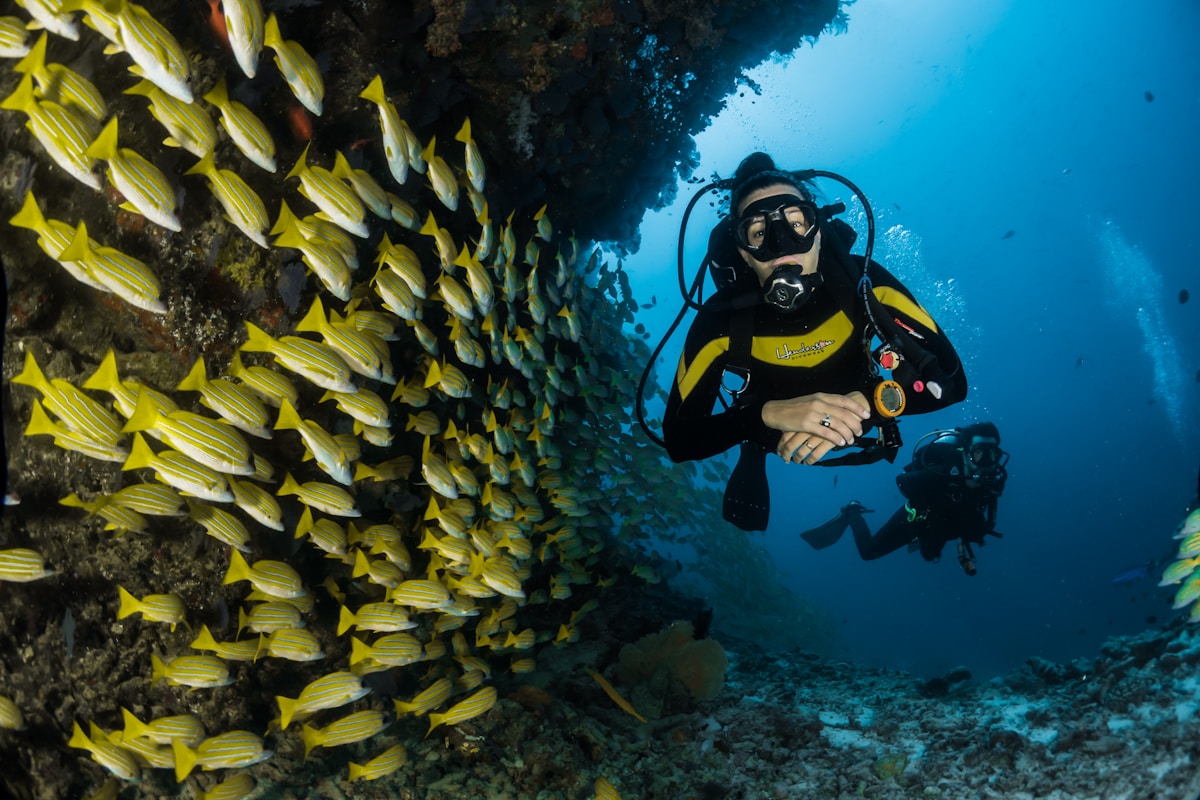
Tubbataha Reefs Natural Park sits in the middle of the Sulu Sea, roughly 150 kilometers southeast of Puerto Princesa, Palawan. There are no resorts here, no day trips, and no casual visitors. The only way to experience Tubbataha is aboard a liveaboard dive boat during a narrow seasonal window, and that exclusivity is precisely what keeps it pristine. Marine biologists rank it among the healthiest reef ecosystems on the planet, and after diving it, I can tell you the science understates the reality.
This isn’t a budget destination or a beginner experience, but if you’re a serious diver, Tubbataha should be at the top of your list.
Why Tubbataha Is Special
The numbers alone are staggering: over 600 fish species, 360 coral species, 11 shark species, 13 dolphin and whale species, and nesting populations of hawksbill and green sea turtles. The park covers 97,030 hectares and consists of two atolls (North and South) separated by an eight-kilometer channel. UNESCO designated it a World Heritage Site in 1993, and the Philippine Navy maintains a permanent ranger station to enforce strict protections.
What the numbers don’t convey is the density and health of the marine life. Wall dives at Tubbataha feel like looking at a coral reef in its platonic ideal — every square meter of wall is covered in hard and soft corals, fish schools are measured in thousands, and large pelagics (sharks, mantas, tuna) appear with a regularity that would be remarkable at any other dive site but is simply normal here.
The Diving: What to Expect
Liveaboard trips typically cover 10-14 dives over the course of six to eight days, alternating between the North and South Atolls. Key dive sites include:
- Amos Rock — A submerged pinnacle where you’re likely to encounter whitetip reef sharks, grey reef sharks, and occasionally hammerheads. Strong currents make this a drift dive, and the visibility regularly exceeds 30 meters.
- Shark Airport (North Atoll) — Named for the whitetip reef sharks that “park” on the sandy bottom like aircraft on a runway. You drift over and watch dozens of sharks resting below — an experience that never gets old.
- Wall Street (South Atoll) — A dramatic wall dive with overhangs, swim-throughs, and dense coral cover. Turtles are common here, often resting on ledges or grazing on sponges.
- Black Rock — Known for large schools of barracuda, jacks, and occasional manta ray sightings. The current can be strong — hook in and enjoy the show.
- Bird Islet area — The shallow sections near the ranger station offer excellent coral gardens at 5-10 meters, perfect for long decompression stops or a relaxed final dive.
Currents range from mild to ripping depending on the site and tides. Most dives are drift dives, and the crew will brief conditions before each descent. Water temperature hovers around 27-30°C, so a 3mm wetsuit is usually sufficient.
How to Get There
All liveaboard trips to Tubbataha depart from Puerto Princesa, Palawan. The crossing takes 10-12 hours overnight. You board in the evening, sleep during the transit, and wake up at the reef. The return trip follows the same pattern at the end of the expedition.
Major liveaboard operators include:
- Solitude One — Well-regarded, steel-hulled boat with comfortable cabins and experienced dive guides.
- Philippine Siren — Traditional phinisi-style vessel with excellent food and spacious dive deck.
- Atlantis Azores — Run by the Atlantis resort group, known for reliable service and good photography support.
Prices range from approximately $2,200 to $3,800 USD depending on the operator, cabin type, and trip length. This typically includes all diving, meals, tanks and weights, and the Tubbataha park entrance fee (about 3,000 pesos for foreigners).
Requirements and Preparation
- Certification: Most operators require Advanced Open Water certification minimum. Some sites have strong currents, so experience with drift diving is important.
- Logged dives: Many operators recommend or require at least 50-100 logged dives. This isn’t a rigid cutoff, but Tubbataha’s conditions — currents, blue water descents, wall dives — are not beginner-friendly.
- Nitrox: Highly recommended and often included. The extra bottom time is valuable when you’re doing three to four dives per day.
- Insurance: Dive insurance (DAN or equivalent) is typically required by all operators. The nearest hyperbaric chamber is in Puerto Princesa — 10+ hours away by boat.
- Camera gear: Bring it. The visibility and marine life make Tubbataha one of the best underwater photography destinations in the world. Wide-angle is essential for the big stuff; macro for the walls.
The Season
Tubbataha is only accessible from mid-March to mid-June. Outside this window, monsoon winds make the Sulu Sea crossing dangerous and the park closes to visitors. Within the season, April and May tend to have the best conditions — calmest seas, warmest water, and peak marine activity (including manta rays).
Book early. Popular operators sell out six to twelve months in advance for prime dates. The limited season combined with high demand means last-minute availability is rare.
Practical Tips
- Arrive early: Fly into Puerto Princesa at least a day before your liveaboard departure. Flights get delayed, and missing the boat means missing the trip — there are no alternatives.
- Seasickness: The overnight crossing can be rough. Pack medication even if you don’t normally get seasick.
- No phone signal: You’re in the middle of the Sulu Sea. No cellular coverage, no WiFi. Some boats have satellite communication for emergencies. Embrace the disconnection.
- Conservation rules: No touching coral, no gloves, no collecting anything, strict buoyancy requirements. The rangers take enforcement seriously, and rightfully so.
Tubbataha isn’t a dive trip — it’s a pilgrimage. The combination of pristine coral walls, pelagic encounters, and the sheer remoteness of diving in the middle of the Sulu Sea creates something that’s hard to replicate anywhere else. If you’ve been diving for years and want to experience a reef the way reefs are supposed to look, this is where you go.